
Jio Platforms Ltd's Rs 30,213-crore initial public offering (IPO) has garnered bids worth Rs 3.73 lakh crore, achieving a subscription rate of 5.57 times the shares on offer, driven by robust institutional and anchor investor demand.

Foreign portfolio investors (FPIs) have injected Rs 30,919 crore into Indian equities in August, marking their second consecutive month of net buying. This follows a Rs 20,200 crore investment in July, indicating a potential reversal after four months of significant outflows, driven by improving corporate earnings, resilient economic activity, and a stable rupee.

Indian benchmark indices Sensex and Nifty saw a rebound in early trade, primarily driven by a more than 4 per cent surge in Tata Consultancy Services (TCS) shares following its robust Q2 net profit announcement. Track Sensex, nifty on October 9.

Finance Minister Nirmala Sitharaman stated that the Reserve Bank of India (RBI) will persist in its efforts to prevent excessive volatility in the rupee, which has significantly depreciated against the US dollar due to global uncertainties, despite India's strong macro-economic fundamentals.

India's anti-terror agency, the National Investigation Agency (NIA), has registered a case to investigate a mid-air attack on Captain Smit Machchhar, an Indian pilot, inside the cockpit of an Israel-bound flydubai flight, citing an "apparent attempt to hijack or cause it to crash."

A Delhi court has permitted the prosecution to record the testimonies of four foreign-based nodal officers from WhatsApp, Google, and Bumble via video conferencing in the Shraddha Walkar murder case. This decision aims to prevent undue delays and exorbitant expenses associated with securing their physical presence, facilitating an expeditious trial. The testimonies are scheduled to begin in December 2026, with specific protocols for identity verification and secure proceedings.

Bangladesh's Home Minister Salahuddin Ahmed will skip the first-ever BIMSTEC home ministers' meeting in New Delhi, with a senior bureaucrat leading the delegation. This absence underscores strained India-Bangladesh ties, particularly following the ouster of the Sheikh Hasina government in August 2024 and Dhaka's request for her extradition from India.

US Secretary of State Marco Rubio is on a three-day visit to India to discuss bilateral ties in energy, trade, investment, defence, and critical technologies, as well as the West Asia crisis. His visit aims to strengthen the India-US Comprehensive Global Strategic Partnership amidst existing friction, with a focus on finalising a proposed bilateral trade deal.

The National Investigation Agency (NIA) has filed its third chargesheet against Satyanarayan Meghwal and Sahil Godara in a case involving cross-border trafficking of arms and narcotics using drones. The accused, arrested in July this year, face charges under UAPA, Arms Act, NDPS Act, and BNS. The investigation reveals an organised syndicate using encrypted channels to smuggle weapons and drugs across northern India, targeting youth and fostering disaffection against India.

Jio Platforms Ltd's (JPL) public offer, valued at Rs 30,213 crore, was fully subscribed within 100 minutes of opening, making it the fastest-ever subscribed IPO in India, driven by strong institutional demand.

Indian benchmark indices Sensex and Nifty experienced declines in early trade, ending a two-day rally, driven by a spike in Brent crude oil prices above USD 101 per barrel and investor caution ahead of the Reserve Bank of India's monetary policy decision. Track Sensex, Nifty on October 7.
Indian benchmark indices, Sensex and Nifty, surged over 1 per cent, recovering from two days of losses, driven by a strong rally in IT stocks, particularly TCS, and a moderation in global crude oil prices.

Punjab FC has announced a 27-member squad for the upcoming Indian Super League (ISL) 2026-27 season, featuring a mix of retained players, national team members, foreign talents, and 10 academy graduates. Head Coach Pavlos Dermitzakis expressed confidence in the balanced squad, which is set to kick off its campaign on October 14 against Odisha FC.

The Kapil Dev Invitational Tour Championship, featuring top Indian and international golfers, is set to begin in Greater Noida. This Rs 2 crore event is crucial as it's the last opportunity for players to secure a spot in the season-ending Race to DP World India Championship.

Indian benchmark indices, Sensex and Nifty, experienced a decline in early trade due to relentless foreign institutional investor (FII) outflows, although a drop in crude oil prices below USD 100 per barrel provided some cushioning. Track Sensex, Nifty on October 1.

US Secretary of State Marco Rubio kick-started a three-day visit to India on Tuesday to advance bilateral ties in energy, trade and investment, defence, critical technologies, and exchange views on the West Asia crisis.

The number of Indians travelling abroad for education fell from 908,364 in 2023 to 770,127 in 2024 and 626,606 in 2025.
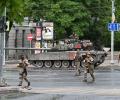
India has requested an update from Russian authorities regarding 69 Indian nationals reportedly serving in the Russian Army. The External Affairs Ministry spokesperson stated that 139 Indians have been discharged so far, but 51 have died. India continues to warn its citizens against joining the Russian military due to significant dangers.
Indian stock markets closed lower, with the Sensex falling 429 points, after the Reserve Bank of India raised its benchmark interest rate for the first time in nearly four years, coupled with rising crude oil prices and persistent foreign fund outflows.

The Sports Ministry has revised its Scheme of Assistance to National Sports Federations (ANSF), significantly increasing financial support for organising international events in India, with up to Rs 50 crore available. The new guidelines also maintain funding for National Championships, introduce assistance for National Games, and outline plans for Olympic Training Centres, aligning with India's 2036 Olympic bid and 2030 Commonwealth Games aspirations.

Asian Games gold medallist Aman Sherawat expresses strong confidence in winning an Olympic wrestling gold medal at the Los Angeles 2028 Games. Having defeated a world champion in the Asian Games, he believes he can achieve what no other Indian wrestler has done, despite the challenges of the competitive 57kg category and past weight issues. He plans to continue training with foreign coaches to fine-tune his techniques.
Indian benchmark indices Sensex and Nifty experienced a significant downturn in early trade, with the Sensex tanking 730 points, driven by surging crude oil prices, escalating geopolitical uncertainties, and a weak trend observed across Asian markets.

India is deeply concerned by the growing consolidation of Pakistan-backed jihadi and radical Islamist groups in Bangladesh, particularly in the strategically vital Chittagong Hill Tracts, which experts warn is transforming the country into a new safe haven for these networks and posing a direct threat to India's security.

Indian benchmark indices Sensex and Nifty saw a significant rebound in early trade, with the Sensex surging over 700 points, driven by a decline in crude oil prices, easing concerns over Federal Reserve tightening, and the appointment of Anup Bagchi as the new MD and CEO of HDFC Bank.
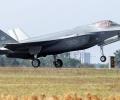
Indian Air Force Chief Air Chief Marshal A P Singh stated on Saturday that the US has not officially offered F-35 fighter jets to India, and no final decision has been made regarding Russia's Su-57 proposal. He made these remarks during the concluding ceremony of the multinational air exercise Tarang Shakti-2026.

Indian stock markets witnessed a significant rebound, with the Sensex rallying 1,109 points and the Nifty closing above 22,720, driven by strong performances in IT and financial sectors, a recovering rupee, and Finance Minister Nirmala Sitharaman's comments on long-term capital gains (LTCG) tax.
Indian stock markets experienced a significant downturn, with the Sensex plunging 1,124 points to a six-month low and the Nifty closing below 22,800, driven by surging crude oil prices, escalating geopolitical uncertainties, and weak global market trends.

The Indian Navy has commissioned INS Mangrol, its third anti-submarine warfare shallow water craft (ASW-SWC), in Mumbai. Built by Cochin Shipyard Limited, the vessel is designed to enhance India's ability to detect and counter submarine threats, especially in shallow coastal waters. Its induction is seen as vital amidst rising geopolitical tensions and increased submarine activity in the Indian Ocean, reinforcing India's indigenous shipbuilding capabilities and maritime security.

The Ministry of External Affairs has issued a strong advisory warning Indian nationals against joining the Russian armed forces, citing significant mortal dangers. The MEA noted instances of individuals seeking recruitment for monetary benefits, with some even renouncing Indian citizenship. The government is actively engaged with Russia to ensure the safety and early discharge of Indians already serving, having secured the release of 139 nationals previously.

The UN human rights office expressed concern over mass detentions during protests in Delhi on Saturday, urging India to respect peaceful assembly rights and release detainees. India rejected these concerns as "misplaced" and "unwarranted interference." The protests, organised by the Gen Z-led Cockroach Janta Party (CJP), demanded electoral reforms and the resignation of CEC Gyanesh Kumar over alleged voter list manipulation, which the Election Commission and BJP deny.

Paytm founder Vijay Shekhar Sharma has pledged personal funds, ranging from Rs 1 crore to Rs 2 crore, to Indian entrepreneurs developing their own artificial intelligence models. This initiative aims to foster indigenous AI capabilities and reduce reliance on foreign models, echoing Sharma's past success in mobile payments.

Gold prices in India have fallen for the third consecutive day, shedding Rs 1,800 to Rs 1.5 lakh per 10 grams, primarily due to a strengthening rupee and weak global cues. Silver also saw a significant decline, tumbling Rs 5,000 to Rs 2.21 lakh per 10 grams.

Indian benchmark indices Sensex and Nifty extended their losses for a third consecutive day, driven by firm crude oil prices, elevated global bond yields, and significant foreign fund outflows, making investors cautious.

Marco Rubio will visit Mumbai and Jamnagar to discuss energy cooperation as S Jaishankar says India-US trade talks are nearing a landing point, with a few issues unresolved.

Indian stock markets, including the Sensex and Nifty, experienced their third consecutive day of declines, driven by a global selloff, escalating tensions in West Asia, and a subsequent rise in crude oil prices.

Indian stock markets closed lower due to selling in IT and FMCG shares, triggered by renewed tensions in West Asia which led to a rally in crude oil prices and concerns over inflation and interest rates.
Indian benchmark indices Sensex and Nifty extended their rally for a second consecutive session, driven by a decline in Brent crude oil prices below USD 100 per barrel and strong buying in banking stocks and Reliance Industries.

US Secretary of State Marco Rubio's visit to India this week underscores the complex dynamics of global energy policy, as Washington re-evaluates sanctions on Russian oil buyers amidst India's continued reliance on Russian crude.

Congress leader Rahul Gandhi launched a scathing attack on the BJP-RSS, labelling them a "bunch of jokers" with no understanding of India, and criticised Prime Minister Narendra Modi's foreign policy as merely "hugging leaders." He also claimed the RSS has become an instrument of large capital, serving Adani and Ambani, and vowed that the Congress would keep pressure on the government until Modi and Shah resign. The BJP hit back, calling Gandhi immature and out of depth.

The data may include details of foreign bank accounts, investment accounts, certain financial investments, interest income, dividends and other specified financial income held by Indian tax residents abroad.
